Visitors to Grand Canyon National Park In Arizona USA
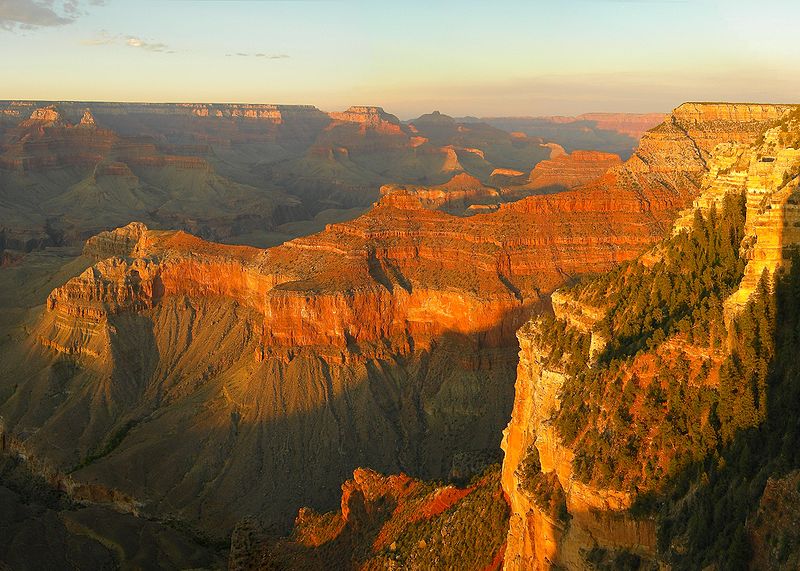 Over the course of 6 million years, the Grand Canyon has been carved by the Colorado River, this canyon is like none other. Grand Canyon is unmatched throughout the world for the vistas it offers to visitors on the rim. It is not the deepest canyon in the world. Both the Barranca del Cobre in northern Mexico and Hell’s Canyon in Idaho are deeper. But Grand Canyon is known for its overwhelming size and its intricate and colorful landscape. Geologically it is significant because of the thick sequence of ancient rocks that are beautifully preserved and exposed in the walls of the canyon. These rock layers record much of the early geologic history of the North American continent. Grand Canyon is also one of the most spectacular examples of erosion in the world.
This awesome natural attraction and tourist destination is a river carved gorge with steep sides in northwestern Arizona. It is officially one of the seven natural wonders in the world, chosen as a World Heritage site and one of jewels of the National Park System. The Grand Canyon is 277 miles long, up to 18 miles wide and attains a depth of over a mile. In 1908 the Grand Canyon was made an official national monument and in 1919, it became a national park. Numerous animals, even endangered California species, make this 1.2 million acre park its home. Aside from the animals, there are more than 1,500 species of plants.
The Colorado River rushes at the bottom of the canyons, about 1,850 feet above sea level. The sides of the canyons are made of rocks, cliffs, ridges, hills and valleys of every form. Many of the ridges have weather carved lines which make them resemble Chinese temples. Thick forests of blue spruce, fir, oaks as well as Ponderosa pines cover the canyon rim. Deep in the canyon’s recesses, the foliage grows sparse and shorter. Pinon pines and juniper growing along the cliffs give way to dry desert scrub on the canyon floor. The North Rim of the Grand Canyon rises about 1,200 feet higher that the south rim. The highest points on the rim are about 9,000 feet above sea level. Most of the 1,904 square miles of the park are maintained as wilderness. There are three distinct sections of the park; the South Rim, the North Rim and the Inner Canyon. Each section has a different climate as well as different vegetation and different experiences. The North Rim is the coldest and the wettest. It receives up to 26 inches of precipitation a year. The South Rim only receives around 16 inches of precipitation a year. The Inner Canyon is the closest to a desert as the lower you descend, the hotter and drier it becomes. The floor of the canyon, approximately a mile below the North Rim, is about 35°F hotter than the temperatures above.
The colorful canyon rocks were formed millions of years ago. Their colors change with the changing light of the sun. Many layers of rock have been bared by the constant cutting force of the rushing river. The first layer of rock through which the Colorado River now cuts is black in color and is called Archean. The second layer, called Algonkian, has a brilliant red color. The next layer is a lavender-brown color and is known as Tapeats sandstone. The forth layer, the Devonian layer, consists of small deposits of lavender stone. Above this, the thick Redwall curves along the canyon. Above the Redwall lies 800 feet of red sandstone called the Supai formation. The Hermit shale, another layer of red rock covers this. On top of the Hermit shale rests the sand colored Coconino sandstone, a pale bank that lies 350 feet below the rim of the canyon. The top layer of the canyon consists of cream and gray colored Kaibab limestone. This limestone forms a rim known as the Kaibab Plateau on the north side of the canyon, and as the Coconino Plateau on the south.
There is so much to see in Grand Canyon, aside from the panoramic and breath-taking sceneries. There are many interesting places that tourists can visit like museums and art galleries, amusement parks, National and State Parks, historical places and witness sporting events & festivals. Mild spring, summer and fall are good times to visit the Canyon as it is a safety haven from intense heat. Most old residents of Grand Canyon recommend a visit during the winter season because there are fewer tourists, parking is plentiful and you can catch a magnificent view of snowy peaks.
The park is located at No. 2 Albright Ave, Grand Canyon, Arizona 86023, USA and is open daily for visitors from 8 am to 5 pm. You can get more information from the Grand Canyon National Park using the below sites.
Further Reading:
 Visitors To USA
You must be logged in to post a comment.